May 12, 2026 • 9 min read
Epoxy vs. Polyaspartic: Which Garage Floor Coating Wins in Montgomery, AL?
A side-by-side breakdown of cost, install time, UV stability, and lifespan for the two most popular garage floor coatings in Central Alabama.
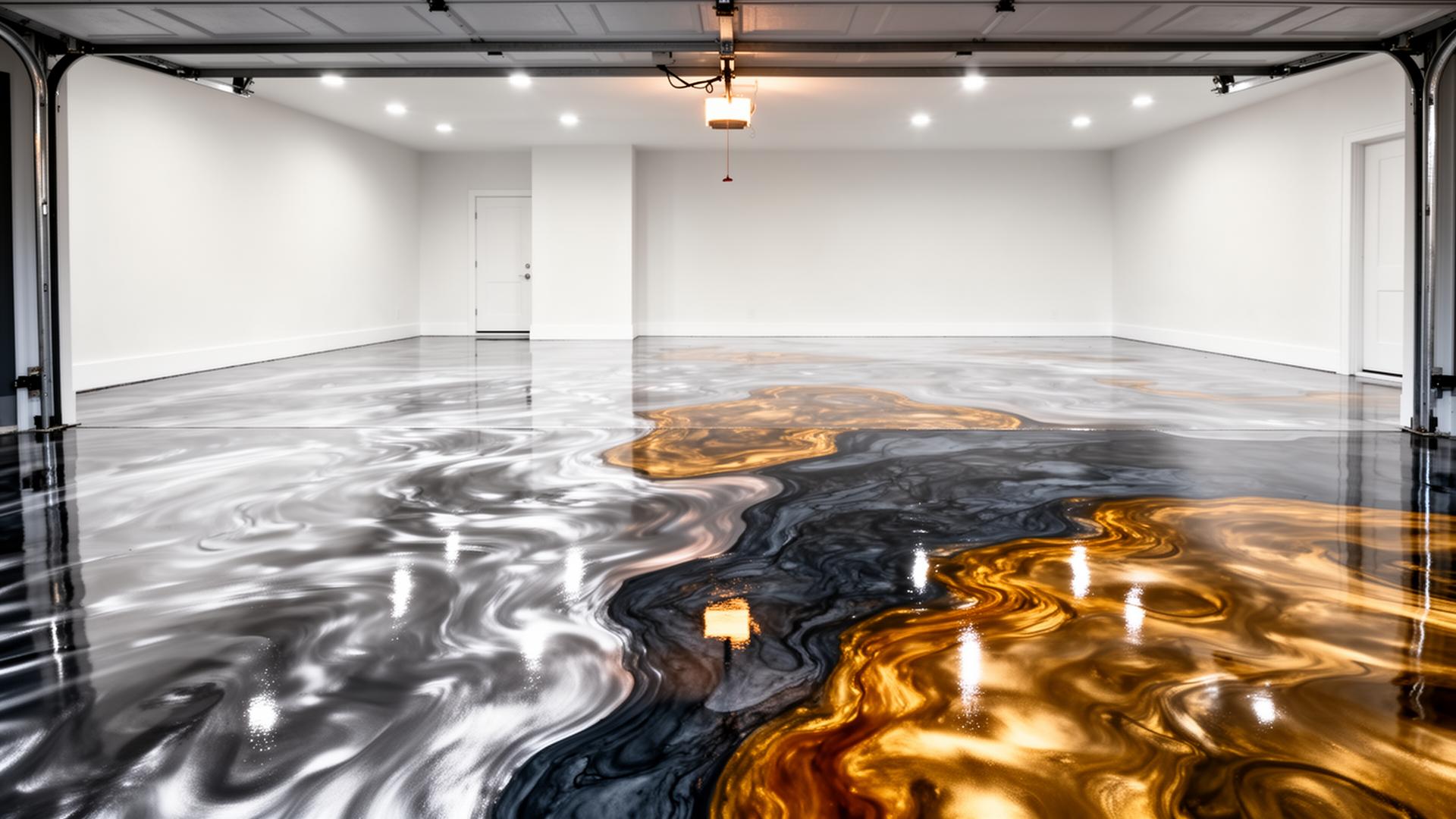
If you’ve gotten more than one quote for a garage floor in Montgomery, you’ve almost certainly heard two terms thrown around: epoxy and polyaspartic. Some contractors will tell you epoxy is the ‘real’ floor and polyaspartic is overpriced hype. Others will swear polyaspartic is the only system worth installing and epoxy is yesterday’s technology. The truth, as usual, sits squarely in the middle — and the right choice depends entirely on your slab, your budget, and how long you’re willing to keep your car out of the garage.
At Capital City Epoxy Flooring, we install both systems every single week across Montgomery, Prattville, Wetumpka, and the surrounding cities. This guide is the honest, no-marketing version of the conversation we have with homeowners in their driveway before we ever quote a job.
What Is Epoxy, Really?
Traditional garage epoxy is a two-part thermoset coating: you mix a resin (Part A) with a hardener (Part B) and the chemical reaction creates a hard, plastic-like film that bonds to your concrete. The best residential systems are 100% solids, meaning every drop of what we mix goes onto your floor — there are no solvents flashing off into the air.
Epoxy has been the go-to garage coating in the United States since the 1980s for good reason: it’s tough, chemical-resistant, affordable, and the build (the thickness of the film) is high enough to fill in minor concrete imperfections. A well-prepped, properly mixed epoxy base coat will outlive the car you park on it.
What Is Polyaspartic?
Polyaspartic is an aliphatic polyurea — a cousin of polyurethane developed in the early 1990s for industrial steel coatings, originally on bridges. It cures by reacting with atmospheric moisture, which means it can be installed in temperatures from below freezing to over 140°F. In Alabama, that matters: a July install in an uninsulated garage can hit 120°F by 2 p.m., and traditional epoxy starts misbehaving above 95°F.
The real headline for polyaspartic, though, is speed. Each coat cures in 30–60 minutes. We can grind, prime, broadcast flake, and apply two clear coats between 7 a.m. and 5 p.m. — and you can drive a car on it 24 hours later. A traditional epoxy install needs 3–5 days of cure time before you reintroduce tires.
Head-to-Head: The Categories That Actually Matter
Cost. For a typical 2-car garage in Montgomery (400–500 sq ft), epoxy with a flake broadcast and polyurethane top coat runs roughly $2,400–$3,400. The same garage in a full polyaspartic system runs $3,200–$4,500. You’re paying about 30–40% more for polyaspartic.
Install time. Epoxy is 3 days minimum on site, plus 3–5 days of cure before driving. Polyaspartic is 1 day on site, 24 hours to drive. If your garage is also where you park your only vehicle, this is a real-life difference, not a marketing point.
UV stability. Standard aromatic epoxy will amber (turn yellowish) when exposed to direct sunlight — usually noticeable within 6–12 months on a south-facing garage door opening. Polyaspartic is aliphatic and 100% UV stable. It will not yellow, ever. If your garage door is open most days, polyaspartic is the smarter spend.
Abrasion resistance. Lab testing (Taber CS-17 wheel, 1,000 cycles) shows polyaspartic losing roughly 20 mg of material vs. 80 mg for premium epoxy. In a residential garage that difference is almost academic — both will outlast your tires — but in a commercial setting with forklift traffic, polyaspartic is a meaningful upgrade.
Chemical resistance. Both systems shrug off motor oil, brake fluid, road salt, and household chemicals. Epoxy is slightly better against strong acids; polyaspartic is slightly better against hot tire pickup and gasoline. Neither will fail in a normal residential garage.
So Which Should You Choose?
Choose epoxy with a polyurethane top coat if: your garage is north-facing or fully shaded, you’re budget-conscious, and you can live without your garage for a week.
Choose polyaspartic if: your garage gets direct afternoon sun, you can’t spare 3–5 days of downtime, you live in Auburn/Opelika where summer install windows are brutal, or you want the longest possible warranty without compromise.
Choose a hybrid (epoxy base + polyaspartic top coat) if: you want the build thickness and crack-bridging of epoxy with the UV stability and speed of polyaspartic. This is our most-recommended residential system and what we install in about 60% of Montgomery garages.
What Doesn’t Matter (Despite What You’ll Read)
Almost every coating failure we see — and we see a lot, because we’re hired to redo other people’s work — has nothing to do with epoxy vs. polyaspartic. It has to do with prep. A cheap acid-etch ‘kit floor’ from a big box store will peel in 18 months regardless of what chemistry is on top of it. A diamond-ground, vacuum-cleaned, properly profiled slab will hold either system for 20+ years.
If a contractor’s quote doesn’t mention diamond grinding, walk away. The single biggest predictor of how long your new floor lasts is the surface profile of the concrete underneath it.
Get a Free Side-by-Side Quote
We’re happy to quote both systems for your garage so you can compare line-by-line. Call (334) 555-0183 or request a quote online — typical response time is under two hours during business days, and consultations are always free with no high-pressure sales.