April 8, 2026 • 8 min read
Installing Epoxy in an Alabama Summer: Why Timing Matters
Why July installs need polyaspartic, why we schedule grinds for morning, and how Alabama humidity affects coating cure.
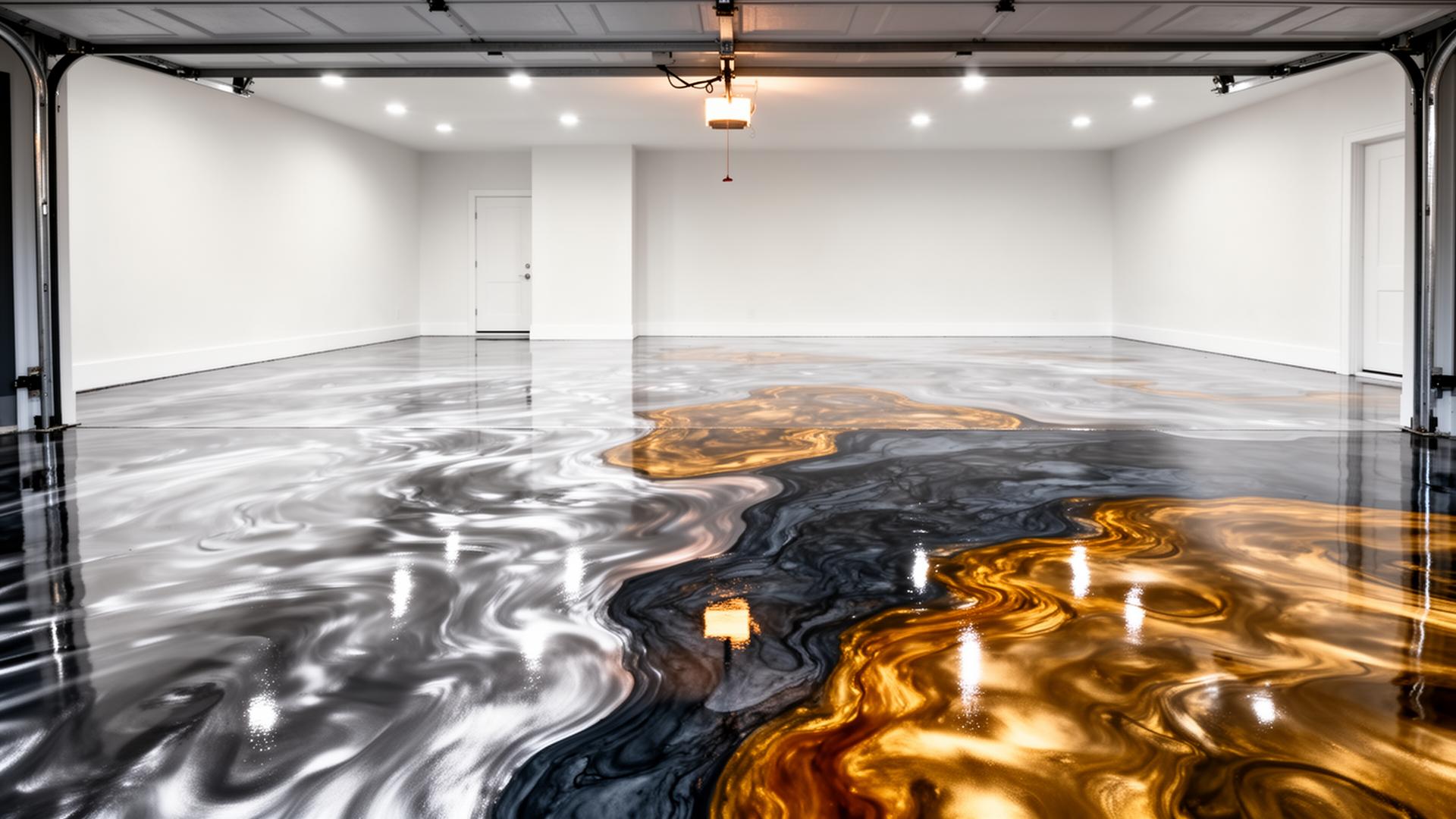
Alabama summers are not friendly to concrete coatings. Slab temperatures hit 130°F+ in uninsulated garages. Ambient humidity sits at 75%+ daily. Afternoon thunderstorms drop the dewpoint suddenly and dramatically. Each of these conditions affects how coatings cure, bond, and ultimately perform. A contractor who treats July like January is going to deliver a July floor that fails by October.
The Slab Temperature Problem
Traditional epoxy reacts based on temperature. The hotter the slab, the faster the chemistry kicks off — which sounds good until you realize that 'faster' means less working time, less self-leveling, and a higher risk of the coating skinning over before you can finish broadcasting flake into it. At 95°F+ slab temps, standard epoxy starts misbehaving. At 110°F+ it becomes nearly unworkable.
Our standard summer practice is to start every install at 6 AM, complete the grind and clean by 9 AM (before the slab heats up), and apply the base coat in the cooler morning slab. By noon when temperatures peak, we're cleaning up rather than mixing chemistry.
The Humidity Problem
Standard epoxy doesn't care much about ambient humidity above the slab, but it cares enormously about moisture inside the slab. Summer humidity drives vapor down into permeable concrete, raising MVER readings on slabs that test fine in winter. We test for vapor on every job year-round but pay extra attention in July and August.
Polyaspartic actually loves humidity — it cures by reacting with atmospheric moisture, so summer is its peak performance season. This is one reason we increasingly recommend polyaspartic for summer Montgomery installs.
The Storm Problem
A passing afternoon thunderstorm doesn't just drop rain — it drops the dewpoint suddenly, which can cause amine blush on epoxy clear coats applied within a few hours of the storm. Amine blush looks like a hazy white film on the cured surface and is the most common cosmetic defect on poorly timed summer installs.
We track weather radar continuously during summer installs and pause clear coat application if any storm is within an hour of the job site. This sometimes adds a day to the schedule but eliminates the blush risk entirely.
Polyaspartic: The Summer Workhorse
For all the reasons above, we install far more polyaspartic between May and September than between November and March. Polyaspartic shrugs off slab temps up to 140°F, loves humidity, cures fast enough to beat afternoon storms, and delivers a single-day install that fits into Alabama's compressed summer activity calendar.
If you're planning an install for June through September, ask specifically about polyaspartic — the system fits the season.
What to Ask Your Contractor
Three questions every Montgomery homeowner should ask any contractor quoting a summer install: 1) What time do you start? (Should be 6-7 AM, not 9 AM.) 2) How do you handle slab temperature above 100°F? (Should mention cooler hours, polyaspartic, or both.) 3) What's your protocol if a thunderstorm rolls in mid-install? (Should pause clear coats and re-schedule if necessary.)
Contractors who can't answer those questions confidently are about to deliver you a summer floor that will fail in 6-12 months.
Schedule Your Summer Install Now
Our summer calendar fills up by mid-May for July-August installs. Call (334) 555-0183 to schedule your free consultation and lock in a window that fits your timeline.