April 30, 2026 • 9 min read
Why Alabama Basement Floors Need Special Epoxy — And How We Do It
Vapor drive, humidity, and the moisture-mitigation systems that make basement coatings actually last in Central Alabama.
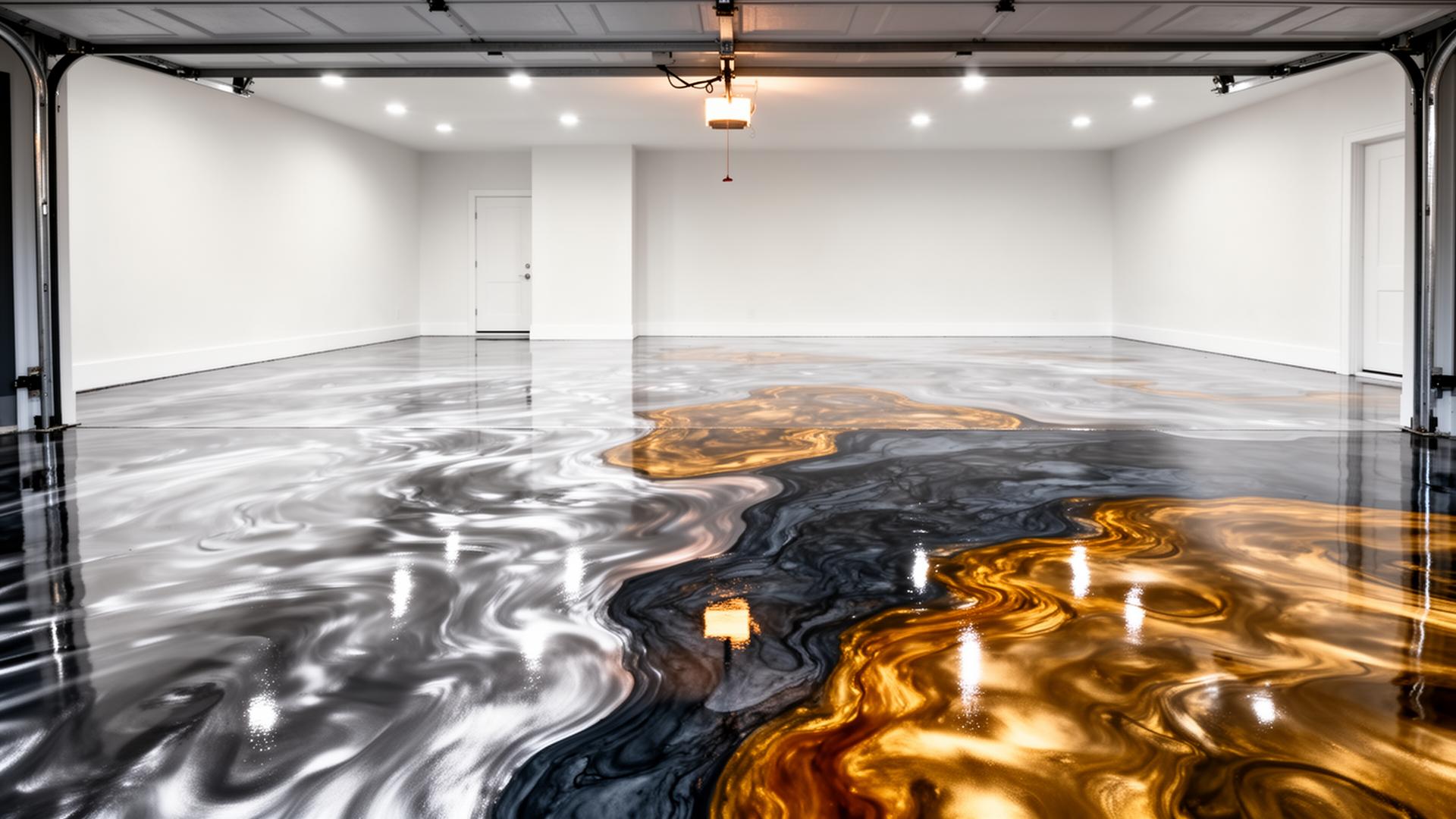
Coating a basement floor in Central Alabama is fundamentally different from coating a garage. The slab is constantly fighting vapor drive from below-grade soil, the ambient humidity in unconditioned basements often sits above 70%, and the consequences of a failed coating include not just cosmetic damage but mold, mildew, and indoor air quality issues that can affect the rest of the house. The wrong contractor can make a basement worse than no coating at all. Here's how the right one does it.
Why Basements Fail Standard Garage Systems
A garage-grade epoxy floor relies on a clean, dry, properly profiled slab to bond. In a basement, the slab is rarely truly dry. Vapor diffuses constantly from the soil underneath, condenses against the cooler slab surface, and over weeks of cycle pushes any non-permeable coating off the concrete from underneath. We've seen $4,000 basement floor jobs (installed by garage-only contractors) delaminate completely within 90 days for exactly this reason.
The fix isn't to coat heavier — heavier coatings actually fail faster because they trap more vapor. The fix is to either let the vapor through (use a breathable coating) or to mitigate it at the slab face with a chemical barrier.
Step 1: Moisture Testing
Every basement project starts with an ASTM F1869 calcium chloride test or in-situ RH probe per ASTM F2170. The cal-chloride test takes about 4 hours; the RH probe takes 72 but is more accurate. We use whichever fits the project schedule.
Results below 3 lbs/MVER (or 75% RH) are normal and can take a standard primer. Results between 3 and 12 lbs need a moisture-mitigation primer. Above 12 needs a heavy-duty epoxy moisture barrier rated up to 25 lbs/MVER. We've never seen an Alabama basement test above 15 lbs without an actual drainage problem first.
Step 2: Moisture-Mitigating Primer
Once vapor levels are known, we select a primer rated for the conditions. Our standard product is a 100% solids epoxy moisture-vapor-emission control primer that creates a chemical barrier at the slab face — vapor literally cannot push through it.
These primers cost roughly 3x what a standard primer costs and add about a day to the schedule, but they're absolutely non-negotiable for any basement above 3 lbs/MVER. Skipping the primer is the single most expensive mistake a basement coating contractor can make.
Step 3: Antimicrobial Base Coat
We add an antimicrobial additive to every basement base coat. This isn't about waterproofing — it's about preventing any microbial growth in or on the coating itself, particularly in the seams or edges where moisture could potentially accumulate. The additive is FDA-approved for food-contact surfaces and persists for the life of the coating.
Step 4: Flake or Quartz Broadcast
Basements benefit from a textured top surface for two reasons: it provides slip resistance (basements without anti-slip can become dangerous when wet), and it adds visual depth that brightens the previously raw space by up to 60% in light reflection.
Most basement homeowners pick a neutral flake blend; a few opt for color quartz for a more industrial look. Both deliver durable, easy-to-clean surfaces that last decades.
Step 5: UV-Stable Clear Coats
Two coats of UV-stable polyurethane finish the system. Yes, even basements benefit from UV stability — windowed basements get sun exposure too, and the polyurethane provides abrasion resistance regardless. The clear coats are what give the floor its long-term durability.
Common Basement Applications
Home theaters, home gyms (where dropped weights and equipment can stain bare concrete), workshops, wine cellars, kids' play areas, music studios, and any below-grade living space that needs to feel finished. The seamless surface cleans with a mop, resists every household chemical and spill, and stays cool in summer.
What Basements We Won't Coat
If your basement has an active drainage problem — visible standing water during rain, efflorescence (white mineral crystals) on the walls, or musty smell that persists with the dehumidifier running — we'll refer you to a waterproofing specialist before we coat anything. Coatings are not waterproofing; they will not fix a leaking basement. The waterproofing has to happen first.
Pricing and Next Steps
Basement coatings in Montgomery typically run $4-$7 per square foot depending on moisture readings and prep. A typical 1,000 sq ft finished basement runs $4,000-$7,000 turnkey. Free in-home consultations include moisture testing at no charge.
Call (334) 555-0183 to schedule your free basement consultation.